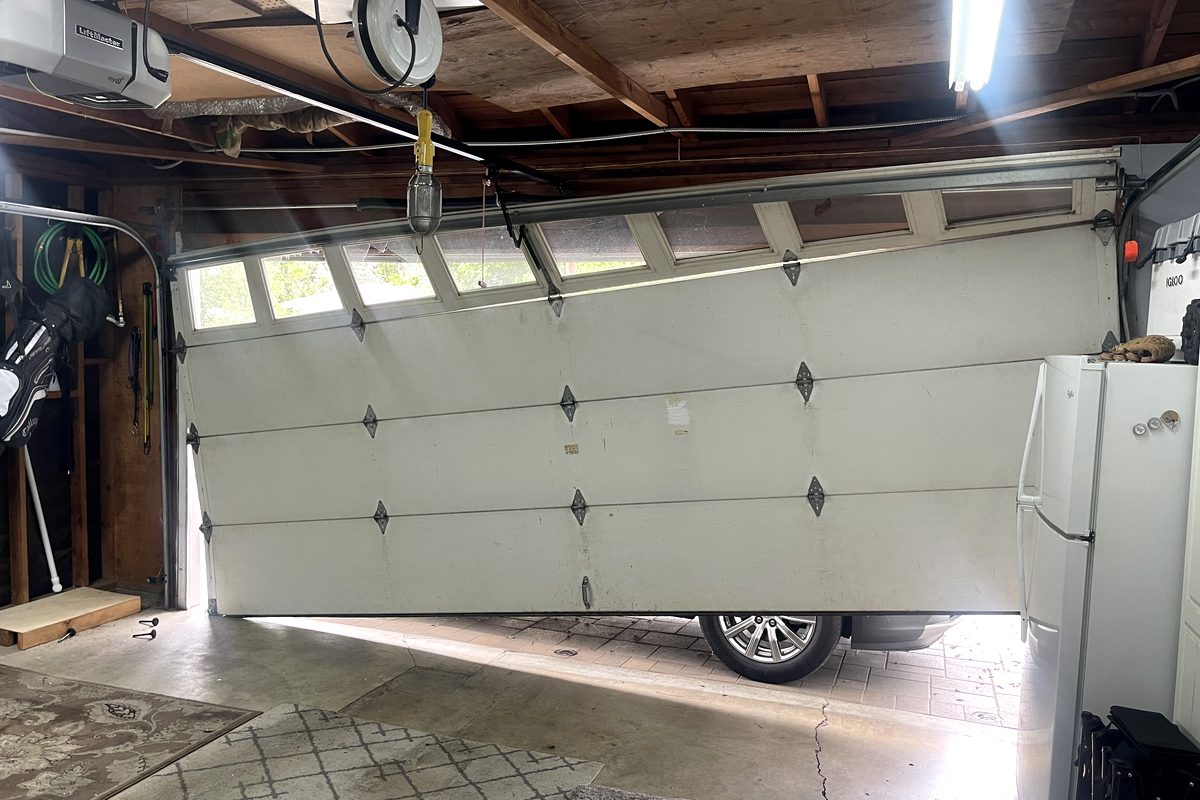
Garage door repair
Off-track doors, bent panels, snapped cables, worn rollers, noisy operation. Diagnosed on the first visit and quoted before we touch anything.
Free estimate, exact price up front Repair in Orange County
New units supplied and installed, old ones diagnosed honestly. Sensors aligned, travel limits set and force calibrated before we leave — which is the half of the job most people skip.
Seven days a week, 8:00 AM – 4:00 PM · Free estimates · CSLB #1155586
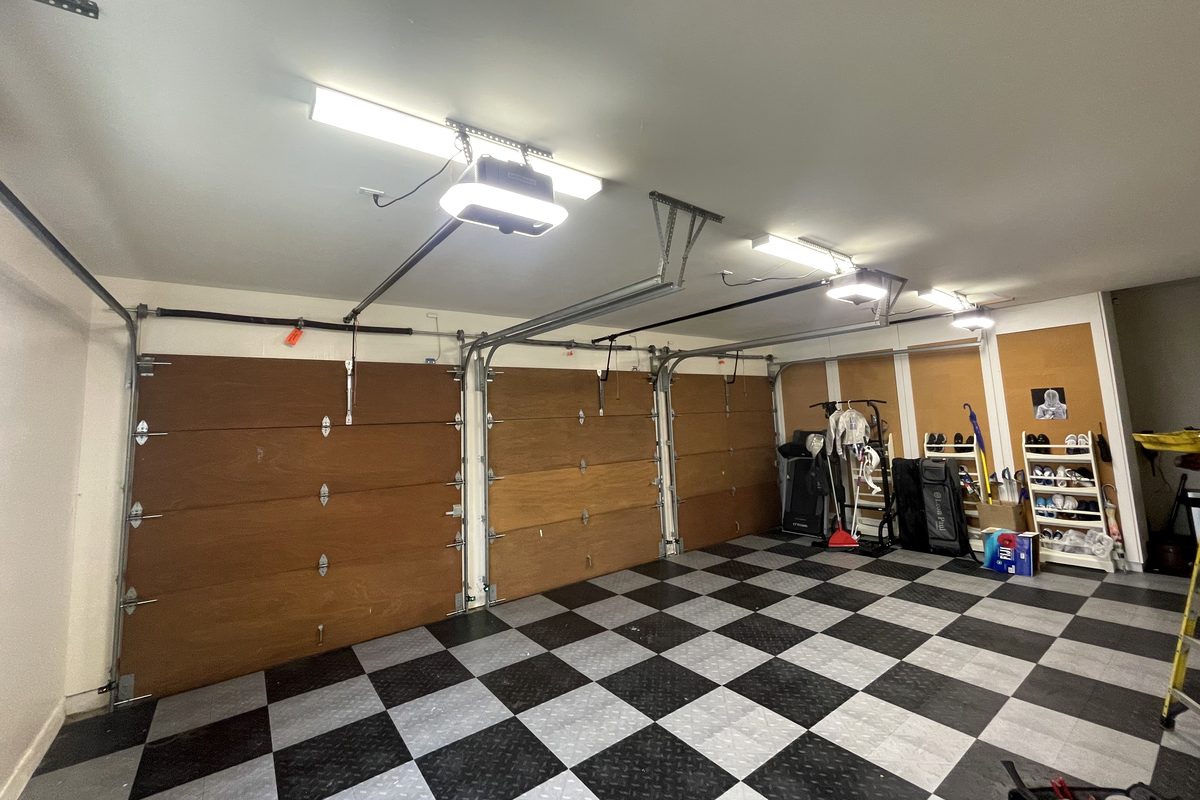
“Motor runs, door doesn’t move” is usually a stripped plastic drive gear — common, and often repairable if the unit is otherwise sound. “Reverses before it closes” is nearly always the photo-eye sensors near the floor. Neither one means you need a new opener, and we’ll say so.
| Belt drive | Chain drive | |
|---|---|---|
| Noise | Noticeably quieter — a low hum | Mechanical rattle you hear through the ceiling |
| Best for | Garages under a bedroom or living space | Detached garages, tight budgets |
| Maintenance | Very little; no lubrication | Occasional tensioning and lubrication |
| Cost | Higher up front | The cheaper unit |
| Lifespan | Comparable when both are installed correctly | Comparable when both are installed correctly |
If there’s a bedroom over the garage, buy the belt. It’s the one upgrade nobody regrets. If the garage is detached and nobody sleeps near it, a chain drive is honest value and we’ll fit one without trying to talk you up.
Under California law, residential garage door openers sold or installed in the state must include a battery backup that operates the door during a power outage. The rule came out of wildfire evacuations where people couldn’t get their cars out. Every new unit we install meets it. If your existing opener is older than that and you live somewhere that loses power, it’s a reason to consider replacing rather than repairing.
An opener already installed in your home before that date is still perfectly legal to keep and repair — the rule bites at the point of sale or installation, not on existing equipment. We’ll also confirm the backup battery actually works, and tell you roughly when it’ll need replacing — they don’t last the life of the opener.
An opener is a two-hundred-pound assist, not a lift. If the springs are tired or the door is out of balance, a new opener will fight it and fail early. We test the balance first — a correctly counterbalanced door should hold position halfway up with the opener disconnected.
The photo eyes go within six inches of the floor, aligned, wired properly and tested with an actual obstruction. This is the part that stops a door closing on a child or a pet, and it is the part most often left half-done.
The door needs to seal at the bottom without grinding, and reverse when it meets resistance. Both are adjustments, both take time, and both are why a “working” opener can still be dangerous.
Programmed and demonstrated before we leave, with the old remotes cleared off the unit if it’s a replacement. You should never inherit a previous owner’s remote codes.
New openers start from $849+ supplied and installed, with the sensors set and the limits calibrated. But not every opener needs replacing. A stripped gear, a dead capacitor, a failed logic board on a recent unit, a broken sensor — those are repairs, and we’ll quote them as repairs. An opener past fifteen years with no battery backup, no rolling-code security and a discontinued board is money spent on borrowed time. We’re not paid to sell you a box, so you’ll get the version that’s true.
While the opener is off, it’s the natural moment to sort the door itself — see repairs or a tune-up.
Usually a stripped plastic drive gear inside the unit, or a disconnected trolley if someone pulled the emergency release. The gear is a common, well-known failure and is often worth repairing on an otherwise sound opener. We will tell you which of the two it is before quoting anything.
Nine times out of ten it is the photo-eye safety sensors near the floor — knocked out of alignment, dirty, or with a damaged wire. The remaining cases are usually the closing force limit set too low or something catching in the track. It is one of the cheaper problems to fix.
Yes. Under SB 969, effective 1 July 2019, residential garage door openers sold or installed in California must include a battery backup so the door can be opened during a power outage. Every new unit we install complies. An older opener already fitted to your home is not illegal — the rule applies at the point of sale or installation — but it is a fair reason to consider replacing rather than repairing.
If there is living space above or next to the garage, yes — it is the single upgrade people are happiest about afterwards. If the garage is detached, a chain drive is honest value and we will fit one without pushing you upward.
Almost always. We check the door's balance and spring condition first, because an opener is an assist, not a lift — bolting a new unit onto a door that is out of balance is how new openers fail inside a year.
Ten to fifteen years is a reasonable expectation with a balanced door and occasional maintenance. Past fifteen, parts availability and missing safety features usually make replacement the better spend.
One visit, one truck. If something else on the door needs attention we'll tell you and quote it before we do it.
Off-track doors, bent panels, snapped cables, worn rollers, noisy operation. Diagnosed on the first visit and quoted before we touch anything.
Free estimate, exact price up front Repair in Orange County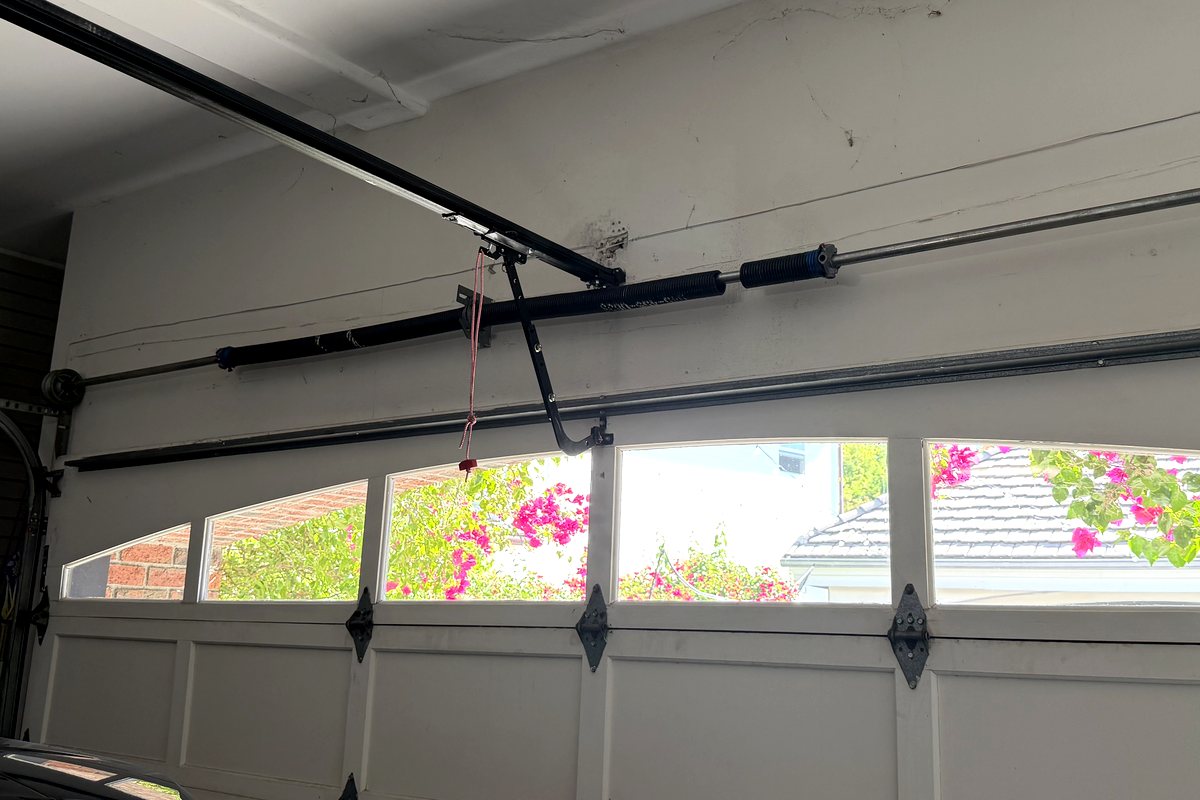
The loud bang, then a door that won't lift. Torsion and extension springs replaced in pairs so the second one doesn't strand you a month later.
$500 per standard pair, fitted Springs in Orange County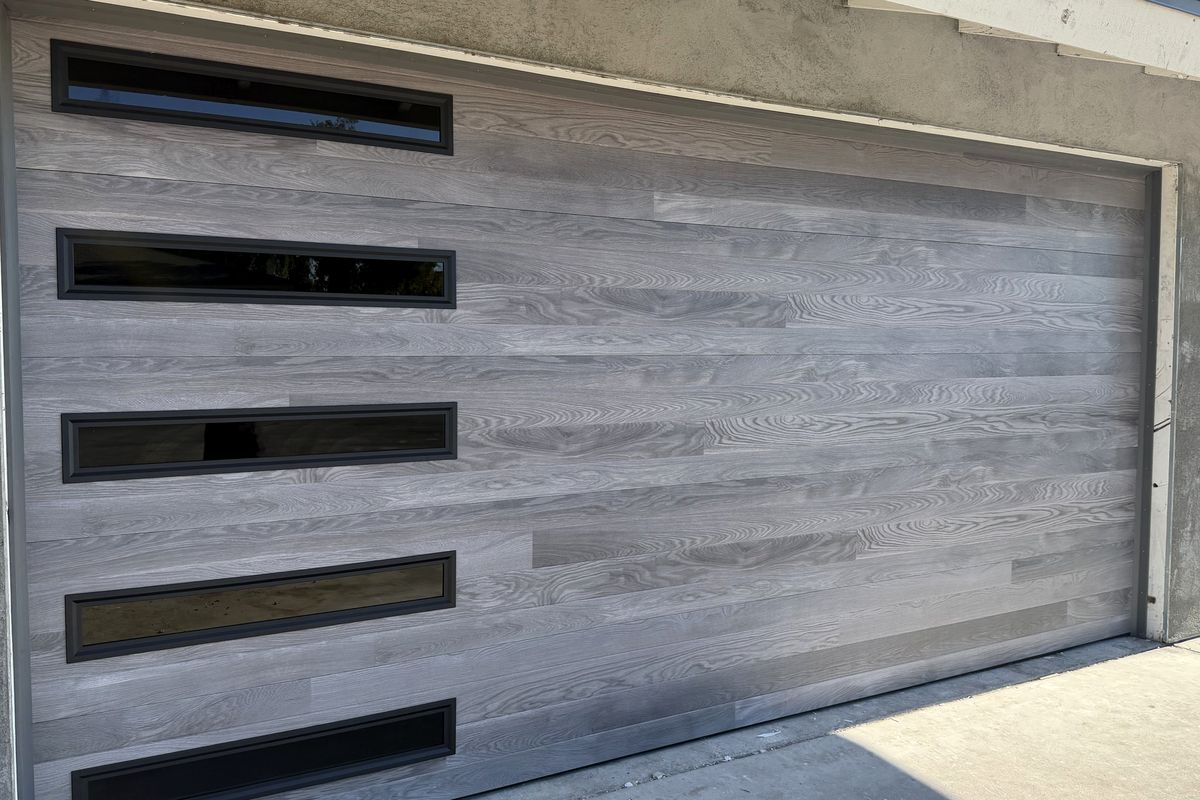
Steel, woodgrain composite and modern flush panel doors. We measure, order, remove the old door and haul it away.
Starting at $1,800+ New doors in Orange CountyFree estimate on a new unit, and an honest answer on whether your old one is worth repairing.